
Enterprise WiFi Hotspot Solution: Stay Connected, Stay Productive in 200+ Countries
When your team is on the road — at a client site in Frankfurt, a pop-up store in Austin, or a field office in Singapore — the internet is the one asset you cannot afford to lose. Yet global business travel still runs on the most fragile connectivity stack imaginable: roaming SIMs, hotel Wi-Fi with password roulette, and expense reports full of roaming charges.
Stay connected, stay productive isn't a slogan. It is the operational standard that NomadsFi builds enterprise hotspots around. Here is how a managed hotspot fleet replaces the chaos of international connectivity — and why businesses that switch typically cut travel communication costs by up to 70%.
Table of Contents
- The problem with roaming on business travel
- What a NomadsFi enterprise hotspot does differently
- Who benefits most
- Getting started: from pilots to fleet
- Enterprise hotspot FAQ
- Connect your business to 200+ countries
The problem with roaming on business travel
Enterprise teams lose productivity in three predictable ways:
- Roaming bills. A single international data session can produce hundreds of dollars in overage charges before the CFO sees it.
- Dead zones and hotel Wi-Fi. Hotel networks throttle, drop, and require a new login every few hours. Client-site networks are often locked down.
- No central visibility. There is no way to see which devices are online, what they cost, or which country a device is in — until the invoice arrives.
There is a fourth problem that rarely makes it into the expense report: security. When a consultant joins a hotel or airport network, every device on that network shares the same broadcast domain. A compromised guest network can expose laptops, tablets, and the confidential files being pulled from a client portal. For teams handling audits, healthcare data, or payment information, public Wi-Fi is an unacceptable risk.
For a distributed workforce, connectivity becomes an IT problem, not just a travel perk. That is exactly why more companies are moving from operator roaming to centralized IT management for global business travel.
What a NomadsFi enterprise hotspot does differently
1. Real coverage in 200+ countries — one device, no local SIMs
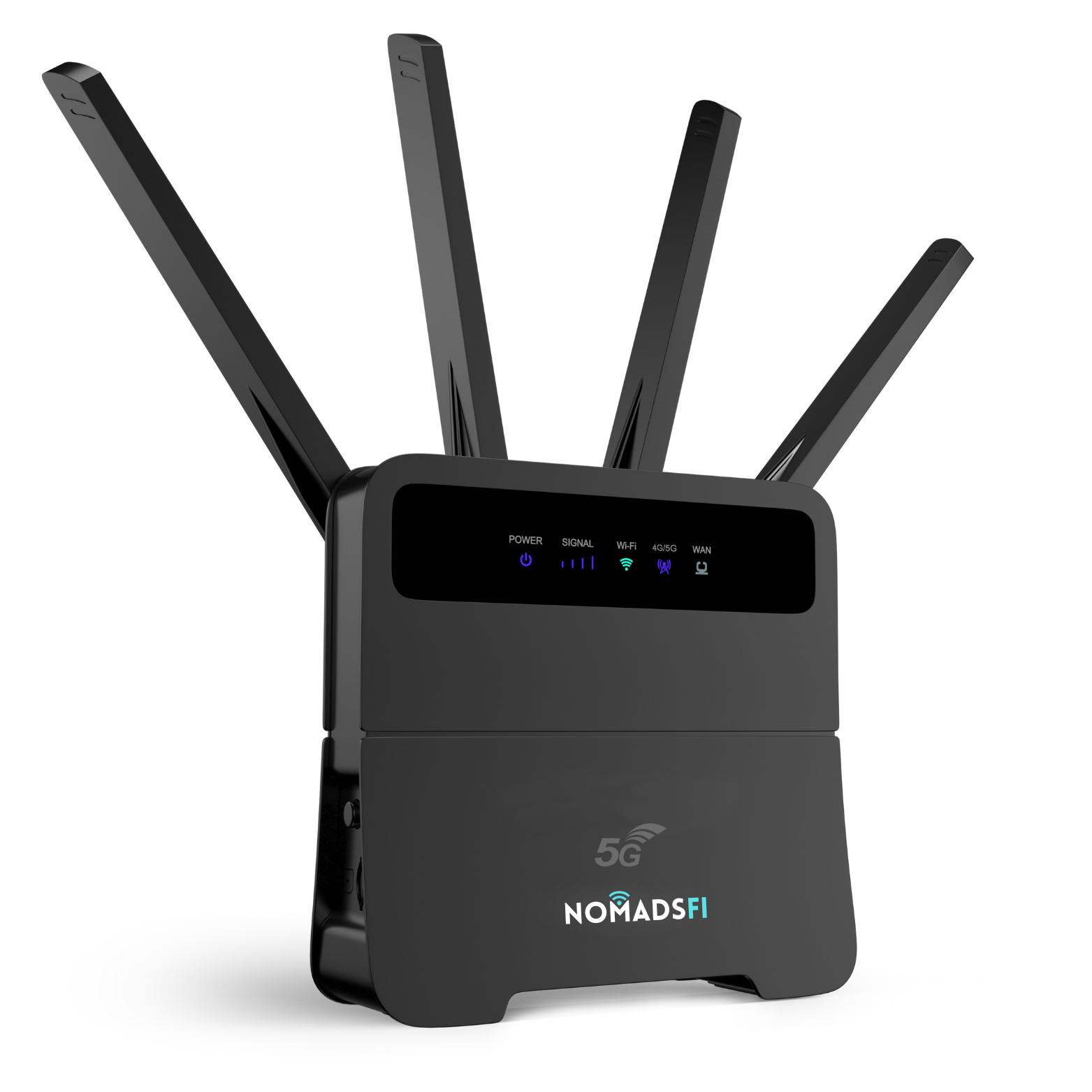
A NomadsFi 5G enterprise hotspot uses CloudSIM technology to deliver connectivity in 200+ countries and territories from a single device. No buying local SIMs, no juggling eSIM profiles per country, no prepaid cards on arrival. Land in a new country, turn the device on, and the network picks itself.
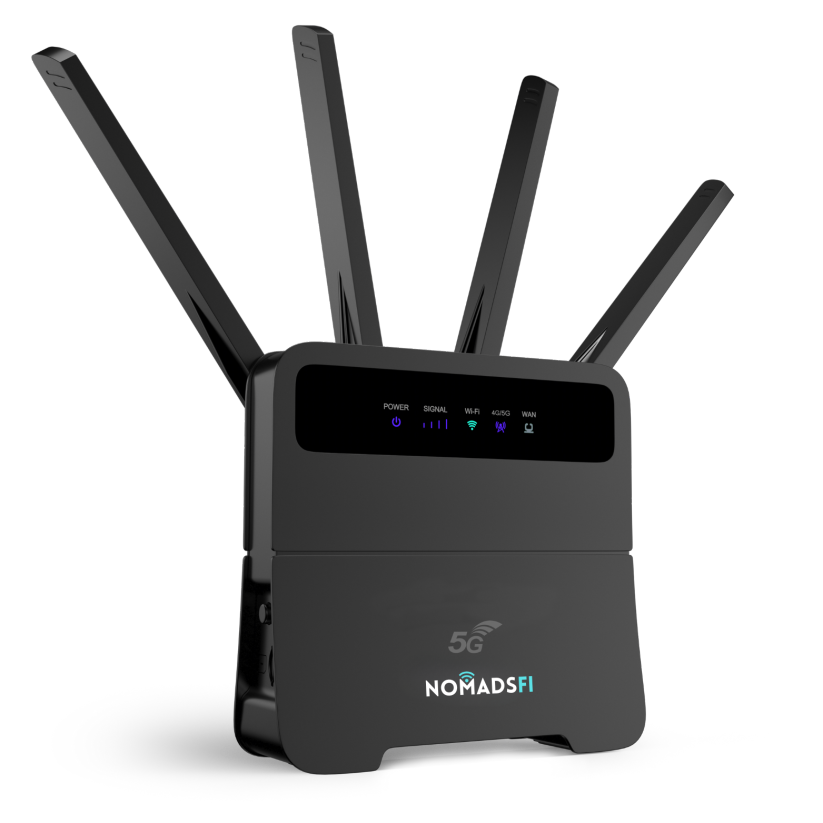
For teams whose members cross borders weekly, this removes the single largest source of travel-connectivity friction. It also removes the IT burden of provisioning SIMs per employee, per country, per trip — one device SKU, one onboarding flow, one global data plan.
2. One device, up to 16 directly connected devices
Instead of one laptop tethered to a phone, a single NomadsFi hotspot supports up to 16 devices connected directly — laptops, tablets, phones, and conference hardware all on one secure, private network.

A field team can walk into a client meeting with one hotspot and run the whole presentation stack: two laptops, a shared tablet for the demo, and team phones. No asking the client for Wi-Fi, no exposing data to a public network. The same device that covers a two-person meeting also carries a five-person site visit — and it moves with the team to the next city.
3. SaaS portal: manage a thousand devices from one dashboard
This is the part that changes the game for IT and finance teams. Every NomadsFi enterprise hotspot is managed from a central SaaS portal that scales to thousands of devices:
- Fleet visibility: see every device's location, online status, and data usage in real time.
- Policy control: set data caps, block categories, and approve devices by team or region.
- Centralized billing: one invoice for the whole fleet, per device or per team, instead of expense-report line items.
IT gets control; finance gets predictability; employees get connectivity that just works. If a device goes dark in a remote market, the portal flags it before a single deadline slips — something no roaming invoice will ever tell you.
4. Zero roaming fees — a cost model you can defend
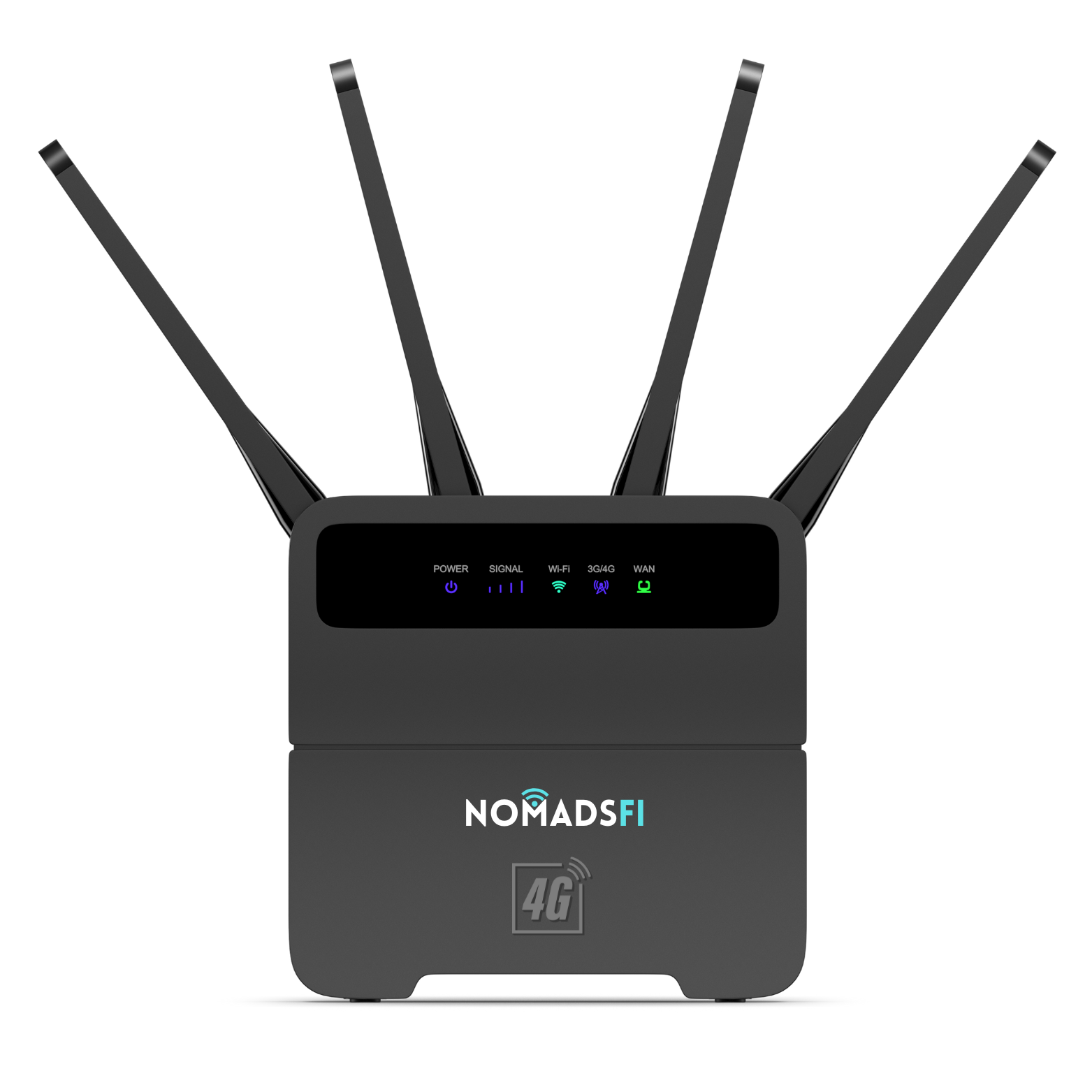
Because every device uses one global data plan, there are no roaming surcharges at the country level. Organizations that move from operator roaming to a managed hotspot fleet typically report travel communication costs falling by up to 70% — a number the CFO notices immediately. The PocketFi 5G portable hotspot brings that same cost model to lighter deployments, while the PocketFi X 4G covers budget-conscious teams that need reliable LTE.

Who benefits most
| Team type | How they use it |
|---|---|
| Consulting & audit | Client-site connectivity without client networks |
| Field service & installs | Onsite internet for tools, tablets, and reporting |
| Event & pop-up retail | Store-grade Wi-Fi with zero venue dependency |
| Sales teams | Reliable hot-desk connectivity between cities |
| Remote & hybrid staff | Home office and co-working backup internet |
Each of these teams shares the same pattern: they cannot control the venues they visit, but they still have to deliver work that depends on the internet. A managed hotspot fleet converts an unpredictable variable — "will we have a network today?" — into a fixed, forecastable line item.
Getting started: from pilots to fleet
- Run a 5-person pilot with NomadsFi 5G hotspots on the routes your team actually travels.
- Measure device online time, data consumption, and the cost per gigabyte versus your current roaming spend.
- Roll out fleet-wide through the SaaS portal, with data policies applied centrally.
- Track the savings in the first full quarter — and watch the 70% cost-reduction benchmark.
Most enterprise customers start the pilot on two or three of their busiest routes — typically a combination of Western Europe, North America, and Asia-Pacific. Two to three weeks of real usage data is usually enough to show both the uptime improvement and the cost difference, which makes the fleet-wide decision easy to defend internally.
Enterprise hotspot FAQ
Does the NomadsFi enterprise hotspot work everywhere?
It works in 200+ countries and territories through CloudSIM multi-carrier technology. The device automatically selects the strongest available network on arrival, so employees do not need to configure anything per country.
How many devices can connect at once?
Up to 16 devices can connect directly to a single NomadsFi 5G hotspot — enough for a full client meeting or field team. Larger deployments simply add more devices, all managed from the same SaaS portal.
Is there a contract or roaming surcharge?
There are no country-level roaming surcharges. The device runs on one global data plan, and fleet billing is consolidated into a single invoice. You can also compare your options on the NomadsFi plans page before committing.
How is fleet billing handled?
Billing is centralized per device or per team in the SaaS portal. Finance sees one predictable invoice instead of expense-report line items, and IT can set data caps so no device runs up unexpected usage.
Connect your business to 200+ countries
Wherever your people go, the network should follow — invisibly, securely, and predictably. NomadsFi enterprise hotspots give your team one device, one plan, and one dashboard for global connectivity.
- See how centralized IT management works for global business travel
- Compare the best portable WiFi hotspots for travel
- Read our 2026 guide to the best mobile WiFi hotspots
- eSIM vs Starlink vs portable WiFi: which travel internet wins?
- See how global teams use WiFi for inventory counting
- Explore the NomadsFi 5G router for RV, home & office
- Not sure which plan fits? Ask our team
NomadsFi — stay connected, stay productive, in 200+ countries.