
Running a food truck, coffee cart, or mobile boutique means your business moves. But most mobile operators still treat internet as an afterthought—borrowing a cafe's WiFi, tethering to a personal phone, or crossing their fingers during the lunch rush. In 2026, that approach costs real money. A dropped payment terminal, a laggy online-ordering tablet, or a security camera that blinks offline can quietly erase a day's profit.
This guide walks through what reliable mobile-business internet actually looks like in 2026, why public WiFi and phone tethering fall short, and how a dedicated 5G hotspot—like the PocketFi 5G—plus a connected camera setup can keep you taking orders, taking payments, and staying secure, wherever you park.
The Hidden Cost of Unreliable Internet for Food Trucks
Mobile businesses don't just need internet for Instagram. They depend on it for four revenue-critical systems:
- POS and card readers — a stalled terminal means a customer walks away, often forever.
- Online ordering and delivery tablets — delayed Uber Eats or DoorDash alerts mean cold food and bad ratings.
- Cloud printers and receipt systems — stuck tickets slow the whole window.
- Security cameras — if your camera isn't streaming, an accident or theft has no evidence.
When your connection drops, every one of these stumbles at once. A 2025 survey of North American food-truck owners found that 68% had lost at least one sale per shift due to WiFi or payment terminal issues, and nearly a third had dealt with a camera outage during an incident. The math is brutal: at an average ticket of $12, even two lost sales an hour across a six-hour shift is $144 a day—about $43,000 a year.
Why Public WiFi and Phone Tethering Are Not Business Solutions
Public WiFi is unpredictable
Parked outside a coffee shop? Their network may be overloaded, password-protected, or set to expire by noon. Event venues often advertise "free WiFi" that collapses the moment 200 food trucks and attendees all join at once. You can't build a payment system on someone else's generosity.
Phone tethering drains your battery and your plan
Tethering a personal phone to a POS and two tablets is a fast way to kill your handset battery by mid-afternoon. Most consumer phone plans also throttle speeds after a few gigabytes, and you're mixing your personal data with business payments—a compliance and billing headache.
Event-day network congestion is worse than you think
Food truck festivals, farmers markets, and street fairs are precisely the moments when your network needs to work—because that's when your sales peak. But they're also the moments when every other vendor and attendee is crowding the same cell towers. A multi-network hotspot that can shift between carriers is the only way to stay online when one tower is saturated.
You need multi-network, business-grade fallback
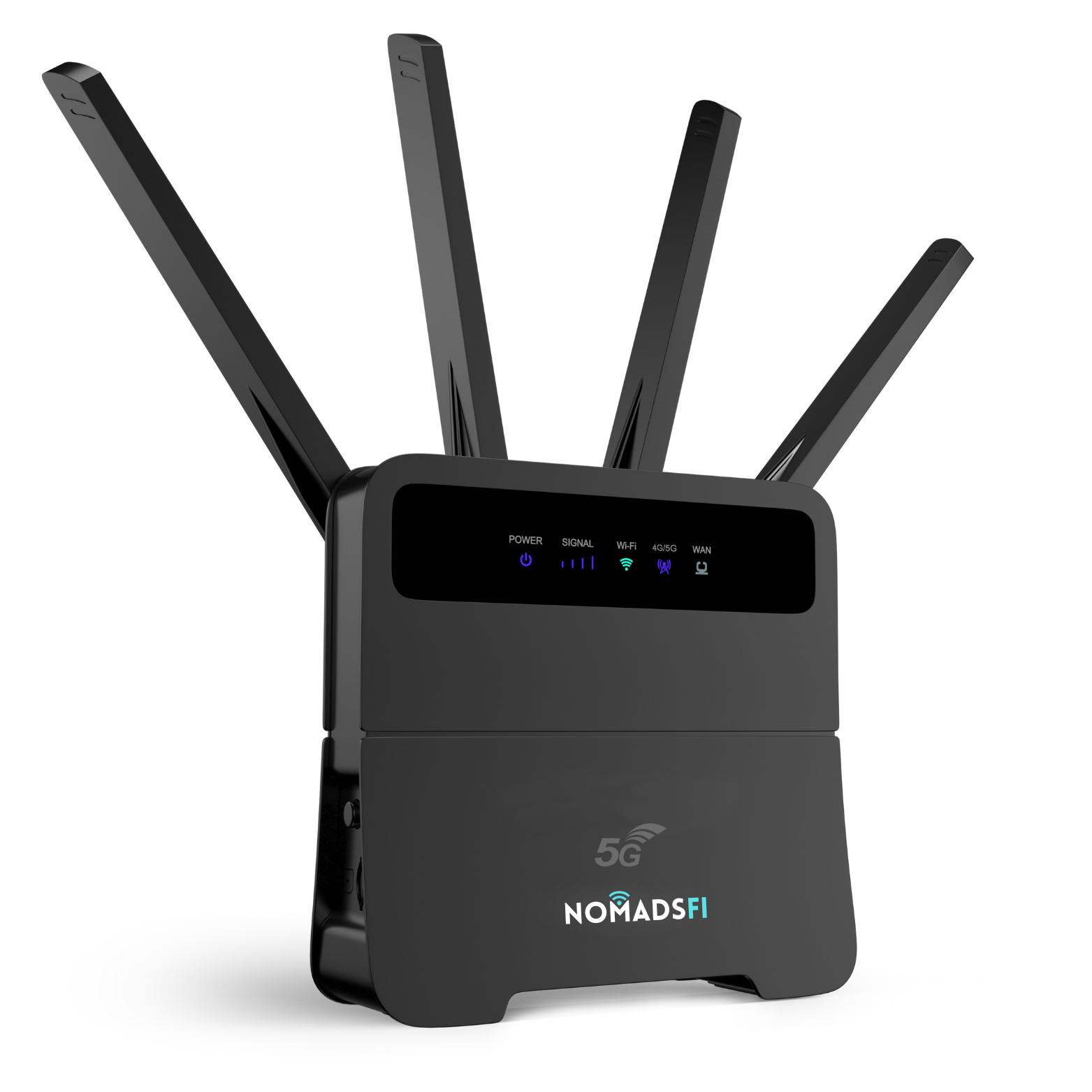
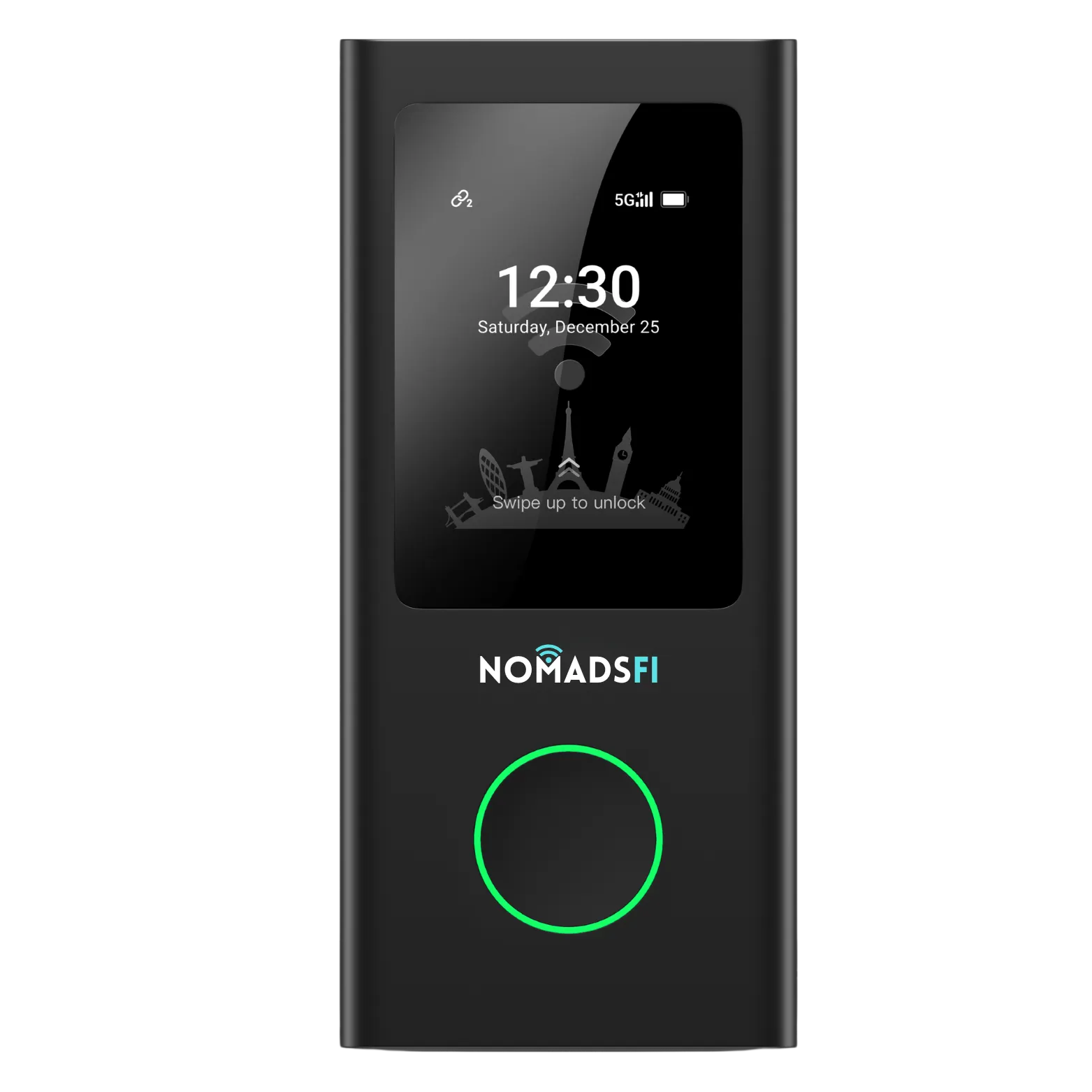
The right setup doesn't depend on a single carrier or a single signal. A modern mobile hotspot uses CloudSIM to connect to the strongest nearby network automatically, switching between carriers mid-shift so you're never stuck when one tower gets congested.
What to Look For in a Mobile Business Internet Solution
Before you buy, score any candidate against these five criteria:
- Connects multiple devices at once — you'll need 4 to 8 devices (POS, tablets, cameras, printer). Look for at least 16 supported connections.
- Runs for a full shift on battery — 8+ hours of real-world use, not lab time.
- Auto-switching between carriers — CloudSIM or multi-SIM that picks the best signal.
- Compact and mountable — it lives on a counter or shelf, not under a seat.
- Flexible data plans — month-to-month, no contract, so you can pause in winter.
Recommended Setup: PocketFi 5G + NomadVIZ E2 Dual
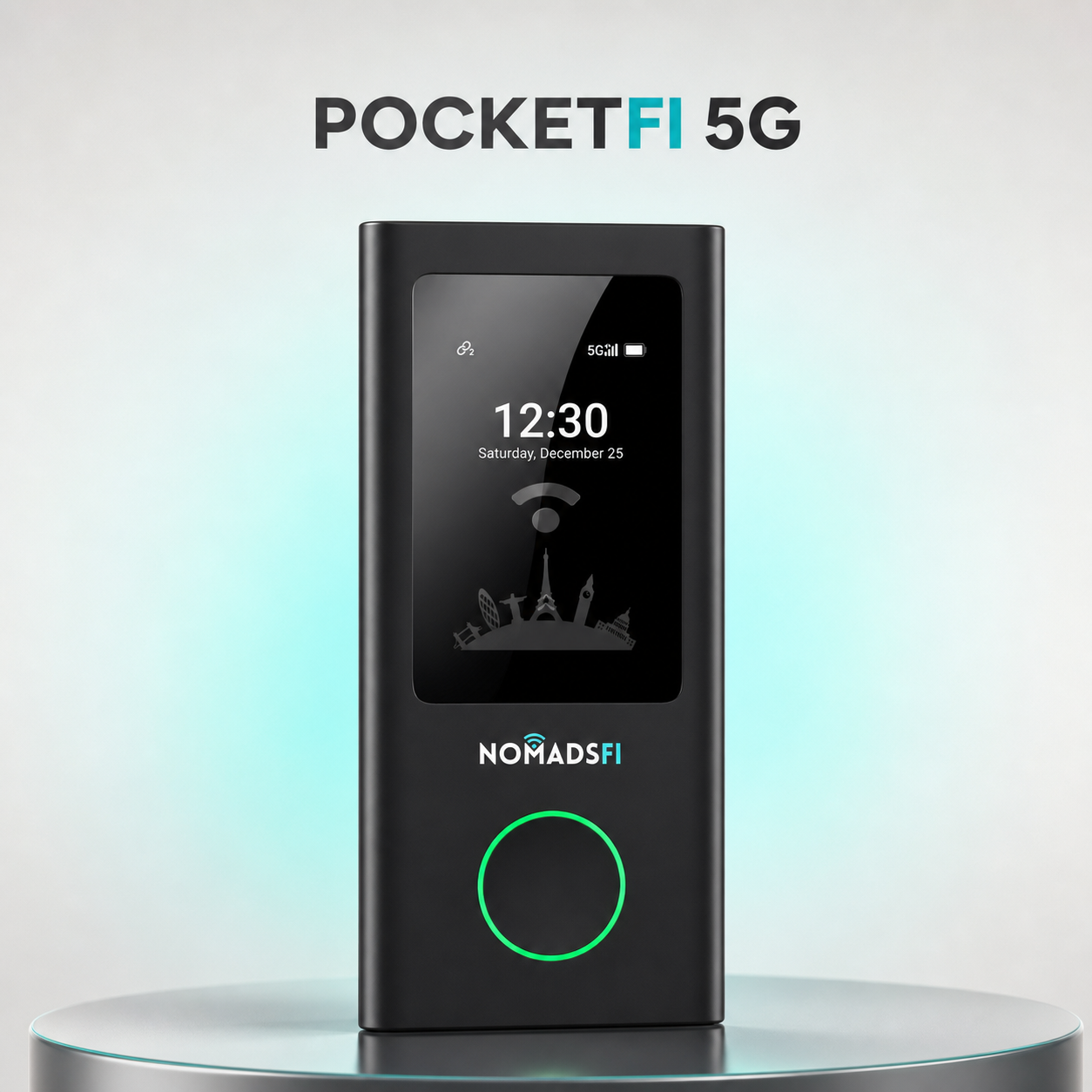
The hotspot: PocketFi 5G
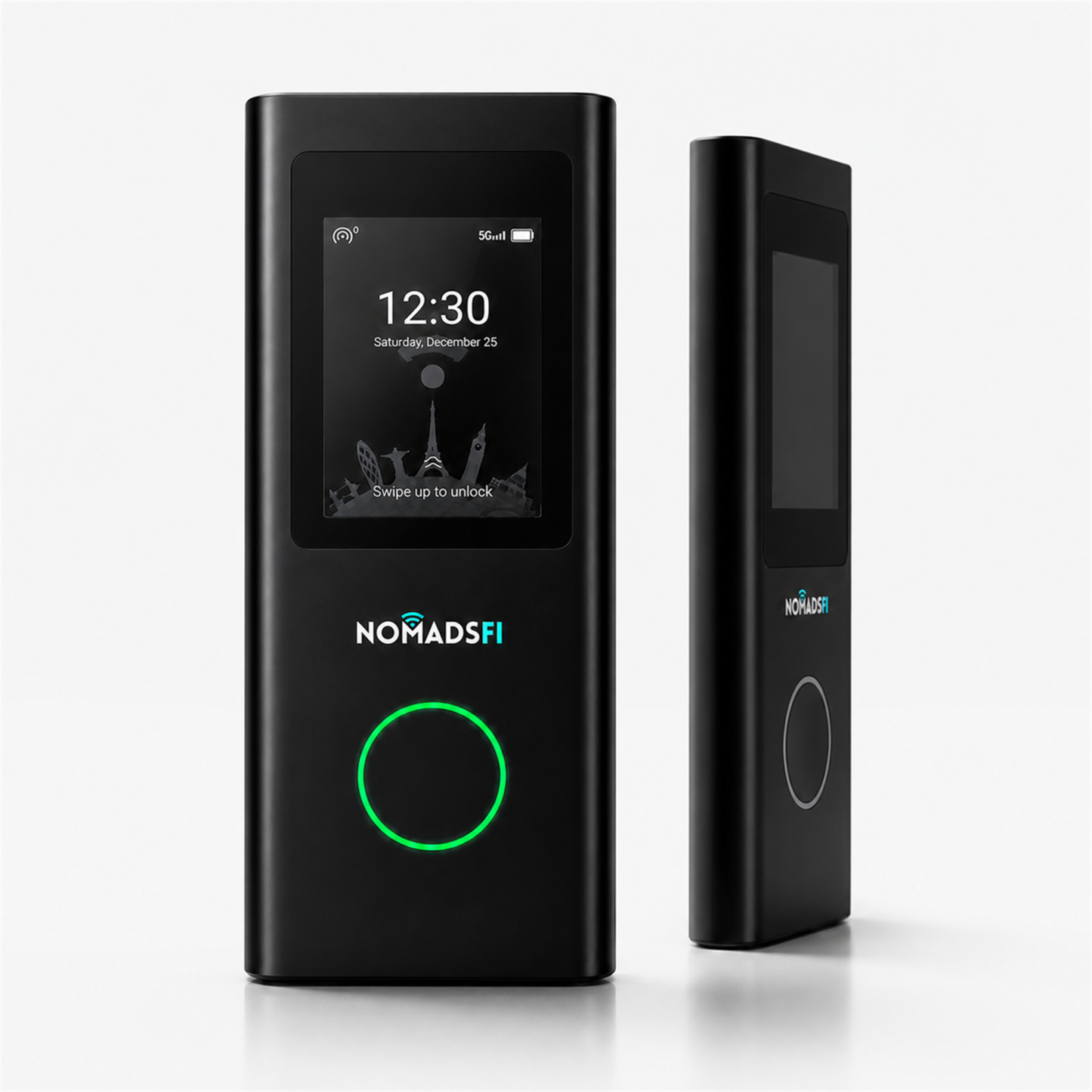
The PocketFi 5G is a pocket-sized 5G hotspot with a touchscreen, CloudSIM auto-network selection, and support for up to 16 devices at speeds up to 2.5 Gbps. The built-in battery runs a full lunch and dinner rush on a single charge. It sits quietly on your counter, connects your POS, tablets, phone, and camera in one shot, and moves with you from lot to event to festival.
The camera: NomadVIZ E2 Dual
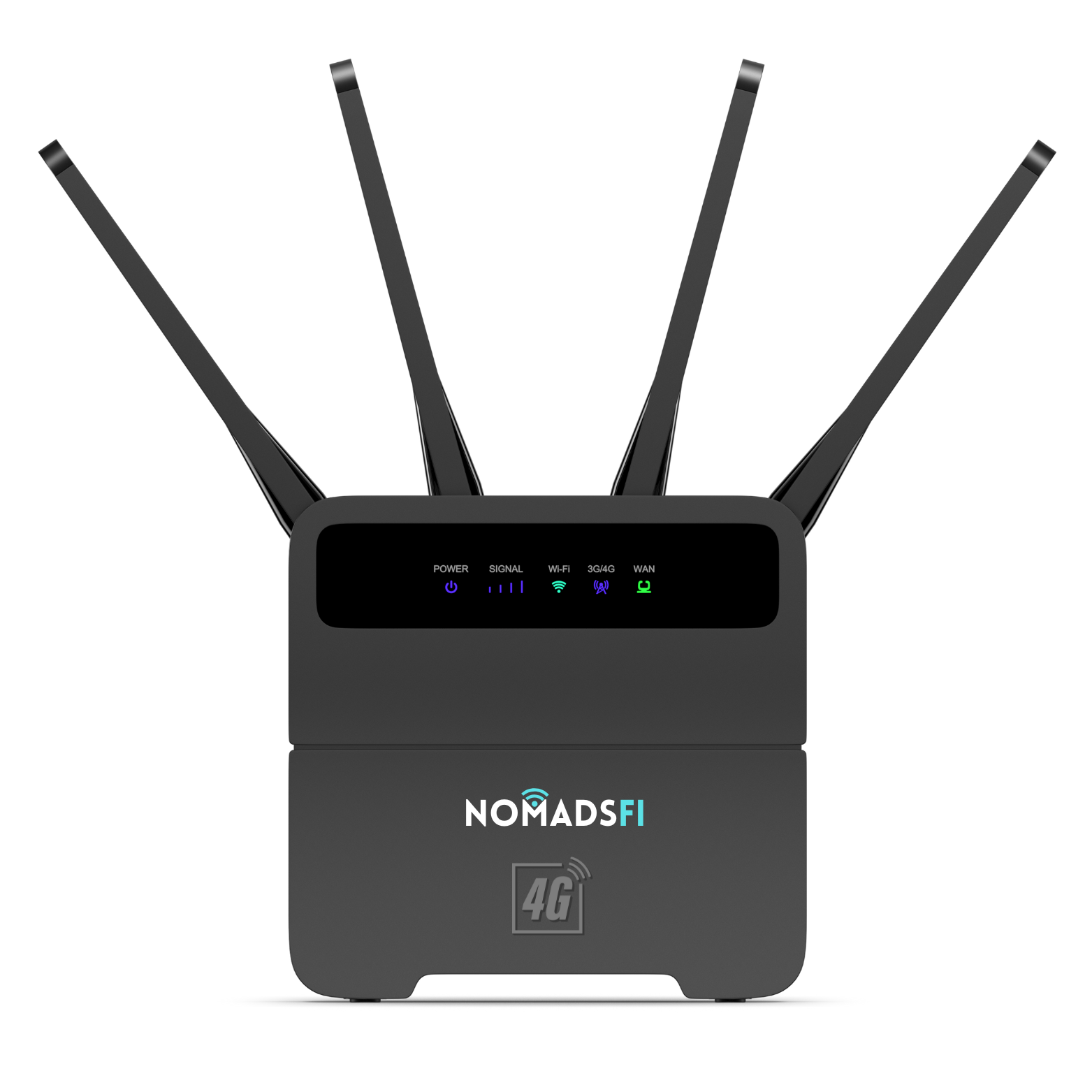
For security and insurance, the NomadVIZ E2 Dual indoor camera uses AI human detection, two-way audio, and secure cloud storage. Point it at your prep area, your cash drawer, or your order window. It streams over the same PocketFi connection, so you can check your truck from your phone during a break.
The data plan
Pair the hardware with a month-to-month NomadsFi data plan—start with a 20 GB or 50 GB tier, and pause or upgrade when festival season hits. No contract, no activation lock-in.
Common Mistakes New Mobile Business Owners Make
Mistake 1: Waiting until the first bad day to buy a hotspot. Most owners don't invest in dedicated internet until they've lost a few hundred dollars to a dead POS. By then they've already lost repeat customers.
Mistake 2: Running the camera and the POS on the same phone. If your phone dies, both go down. A dedicated hotspot separates the network.
Mistake 3: Underestimating data usage at events. Online ordering tablets, cloud printers, and cameras can chew through 10–20 GB in a busy weekend.
Mistake 4: Not testing the setup in the actual parking lot. Signal strength varies block to block. Do a test run before the event, not during the rush.
Cost Comparison: What Mobile Internet Actually Costs
| Solution | Monthly cost | Reliability | Best for |
|---|---|---|---|
| Public WiFi | $0 | Low | Personal browsing only |
| Phone tethering | $15–$30 | Medium | One-off trips |
| PocketFi 5G + data plan | $40–$90 | High | Full-time mobile business |
| Wired broadband (fixed location) | $60–$100 | High | Permanent storefront |
Wondering how this compares to other on-the-road setups? Our guides on WiFi for truckers and internet for construction sites cover the same multi-network logic.
Frequently Asked Questions
Do I need a separate SIM card for my food truck hotspot?
No. The PocketFi 5G uses CloudSIM, which downloads carrier profiles over the air. You buy the device, activate a plan in the app, and you're connected.
How many devices can a mobile hotspot handle during a rush?
The PocketFi 5G supports up to 16 devices. For most food trucks that's plenty: POS terminal, ordering tablets, a printer, your phone, and a camera or two.
Can I pause my data plan in the off-season?
Yes. NomadsFi plans are month-to-month. You can pause or downgrade in winter and scale back up before festival season without penalty.
Will the camera work if the power in my truck cuts out?
The NomadVIZ E2 Dual needs continuous power. The PocketFi 5G has its own battery, so if you wire the camera to a small backup battery pack, your recording keeps running through a power blip.
Is this setup good for international events?
Absolutely. PocketFi 5G works in 200+ countries with the same CloudSIM system. Add an international data plan when you travel.
Bottom Line
Your food truck is a business on wheels, and your internet should be too. A dedicated 5G hotspot like the PocketFi 5G, paired with the NomadVIZ E2 Dual camera and a flexible monthly plan, pays for itself in the first week of lost sales you never have to take.
Ready to stop gambling on the cafe's WiFi? Compare NomadsFi data plans or shop portable hotspots.