
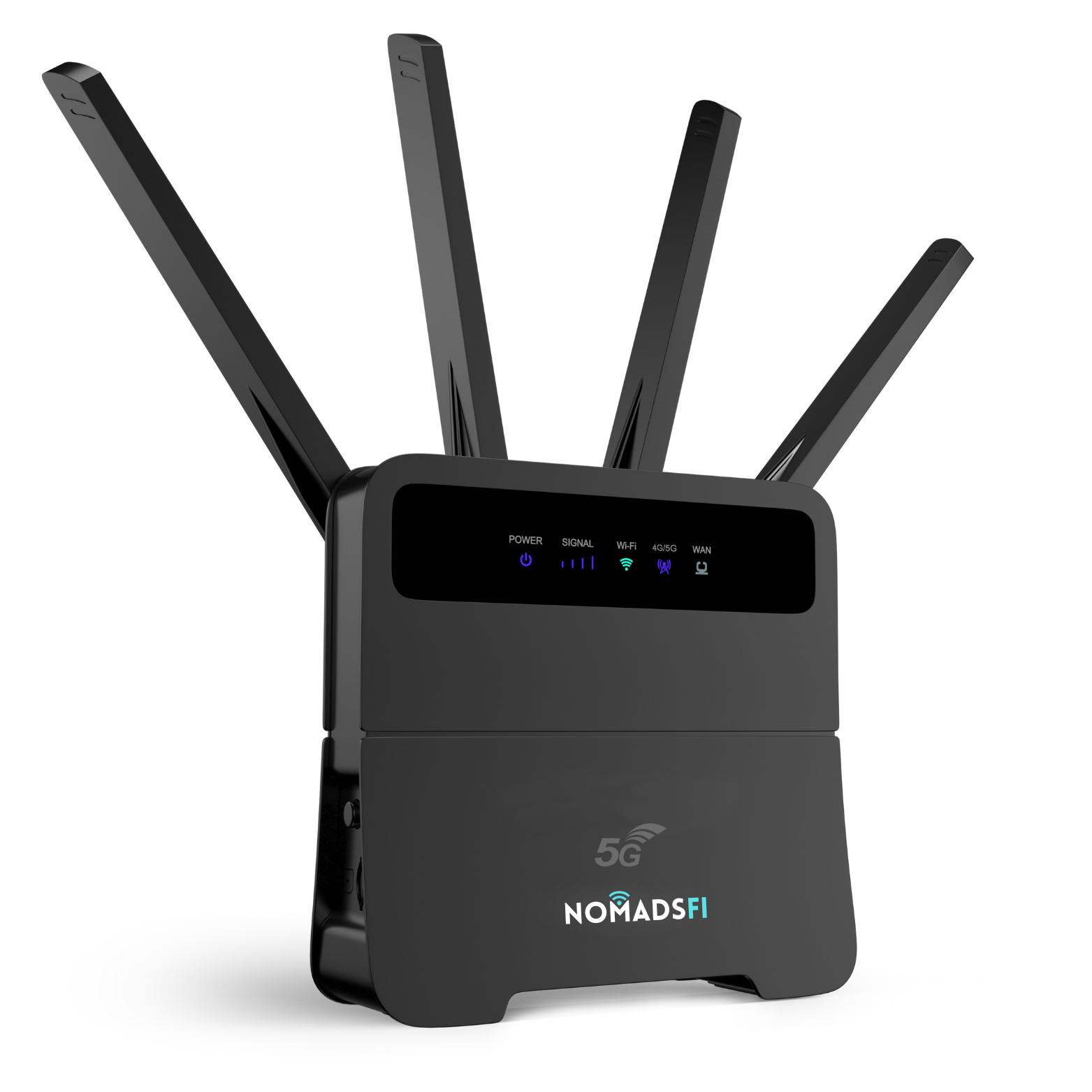
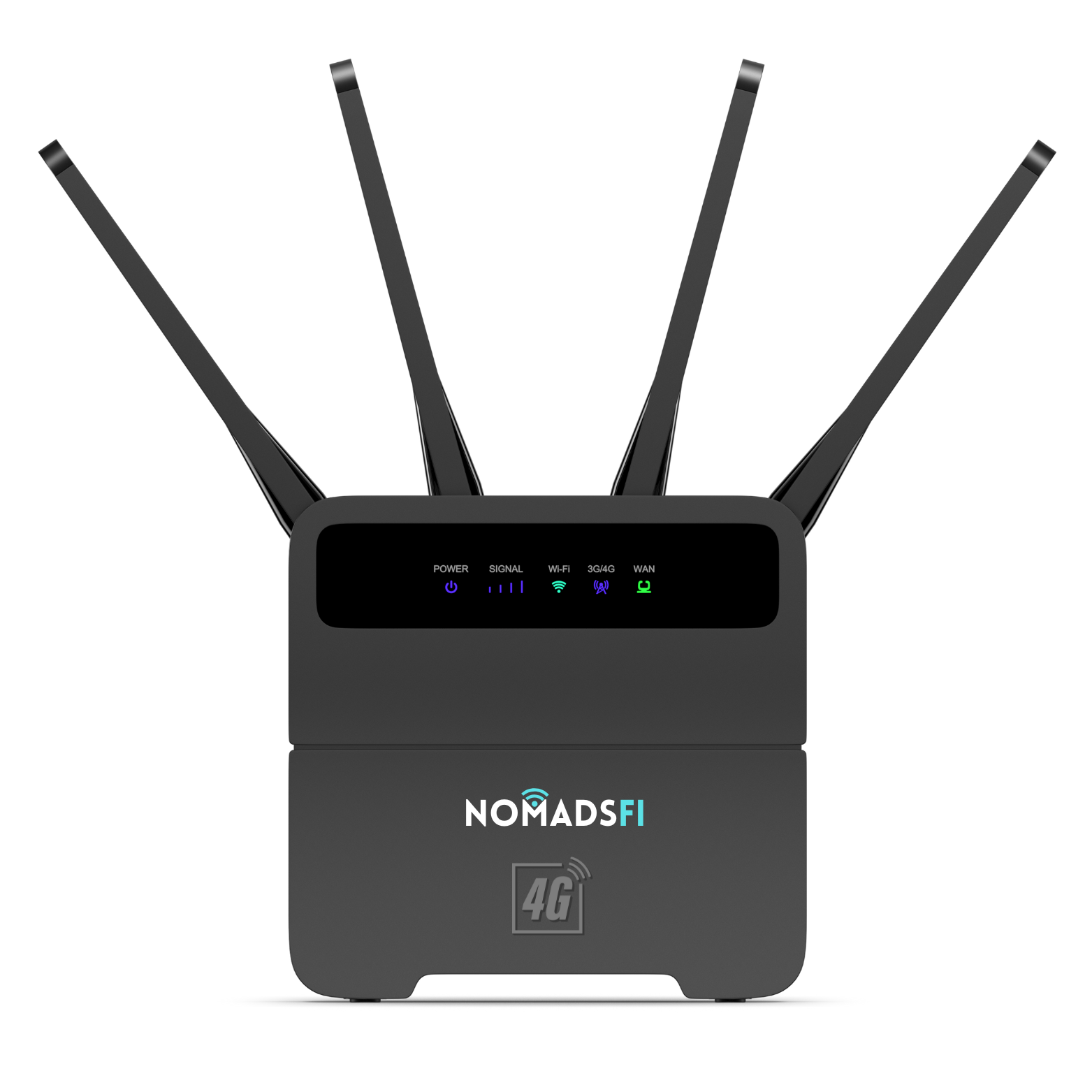
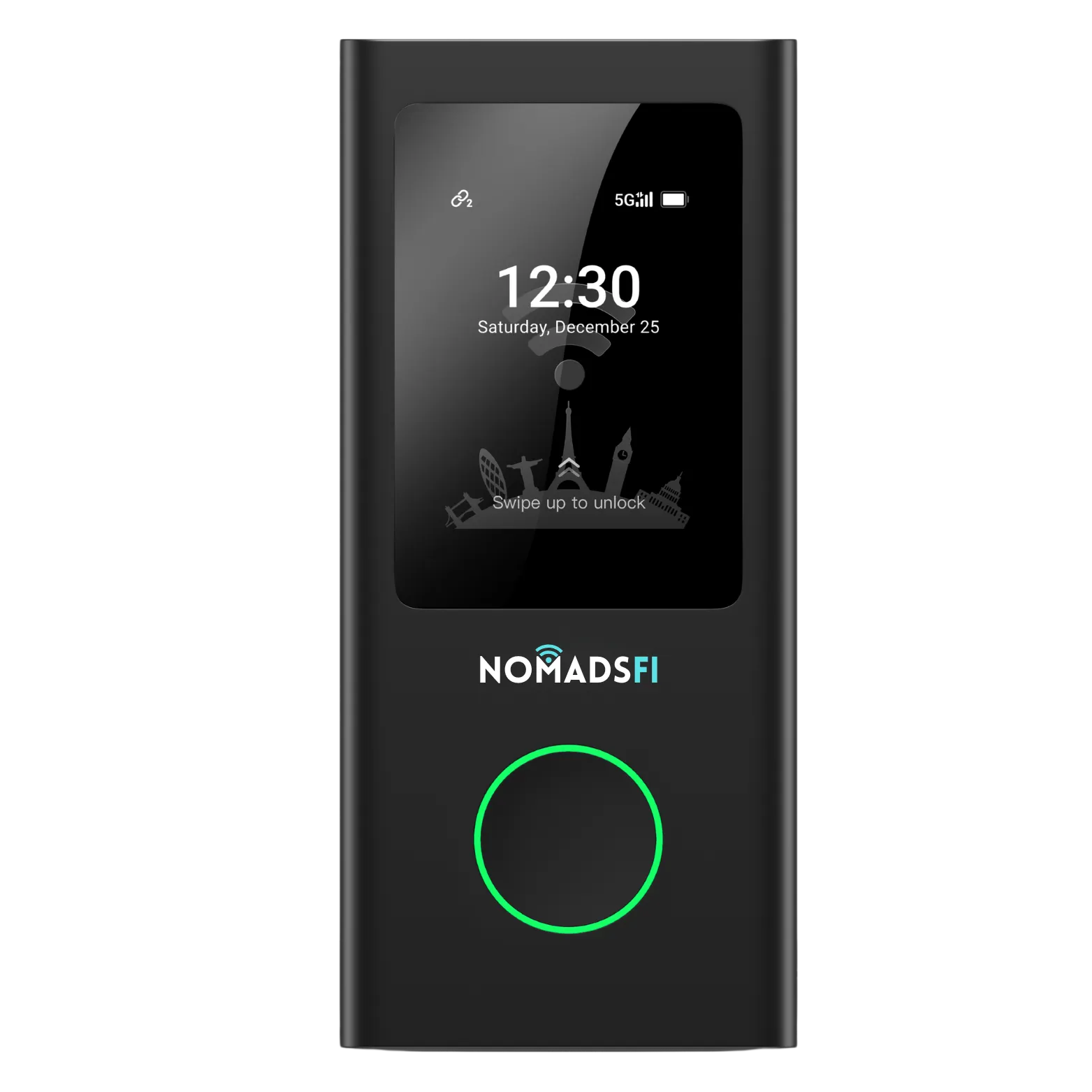

Simon, the British Sailing Team's meteorologist, has a straightforward account of the team's boat WiFi: six weeks using NomadsFi 5G routers in Los Angeles during training for the 2028 Olympics. In his video testimonial, he describes reliable equipment, useful signal offshore and responsive local support.
Those are practical concerns for a team collecting information on the water. Wind readings need a location and time. A boat track is easier to review alongside images from the session. In this project, NomadsFi supplied connectivity alongside the team's sailing and wind-data collection setup, supporting data and image uploads during training.
This sailing boat internet case brings together Simon's video, a readable transcript and project photos. It also explains how a marine WiFi hotspot fits into a coastal training setup, including the distinction between collecting measurements and transmitting them to the team.
Written by NomadsFi Team. Simon's video and the published customer story are linked below. Additional project feedback is identified separately. Sensor examples explain possible integrations; they are not confirmed equipment from this deployment.
The sailing connectivity setup at a glance
Our recommendation for a temporary coastal training camp is a dedicated NomadsFi mobile hotspot, subject to a coverage test on the actual water you will use. It gives a crew a connection they can take between the dock, support boat and accommodation, without making one person's phone the team's permanent router.
| Task | Equipment involved | Where NomadsFi fits |
|---|---|---|
| Share wind measurements | Wind sensor and compatible recorder or gateway | Internet uplink for a connected app or computer |
| Send boat positions and tracks | GPS/GNSS receiver and tracking software | Upload collected position data while cellular service is available |
| Send training images | WiFi-capable camera, phone or computer | Share images with coaches or analysts |
| Work from a support boat | Compatible tablets, laptops and phones | Shared boat WiFi for the connected crew |
| Sail beyond cellular coverage | Satellite equipment and suitable service | A cellular hotspot alone does not provide an ocean connection |
The British Sailing Team case: six weeks in Los Angeles
In the video, Simon introduces himself as the British Sailing Team's meteorologist and places the project in Los Angeles during summer training for the 2028 Olympics. He says the team used NomadsFi 5G routers for six weeks. Our customer case page adds the deployment detail: seven PocketFi devices.
The project account describes connectivity for the sailing and wind-data collection setup, with images transmitted during training. Simon's video speaks directly to the reliability of the connection and the support the team received. Together, these sources describe both the team's use and its experience with the service.
| Detail | Source |
|---|---|
| Simon's role; Los Angeles; six weeks; 2028 Olympic preparation | Video, from 00:01 |
| Reliable equipment; signal offshore; local support | Video, from 00:16 |
| Hope to use the devices again next year and for the Games | Video, from 00:26 |
| Seven PocketFi devices; written feedback and photos | Published NomadsFi case page |
| Data and image uploads; comparison with earlier hotspots | Additional project feedback shared with NomadsFi |
The case page also publishes written feedback from the team:
“The NomadsFi units worked exactly as required”

Customer voice: watch Simon describe the connection
Hear the experience from Simon himself. This video was published on NomadsFi's YouTube channel and is embedded here with the source link and a reading transcript.
Reliability on the water
“We found them to be really reliable”
Simon also describes getting good signal while offshore during that training block. He gives no distance or measured uptime figure. For crews considering boat internet near shore, his account is a useful report from the field; coverage still needs to be checked on the route you will sail.
Support when the team needed it
Simon calls the service from local dealer Evan Zhang brilliant. His description of the help is direct:
“Nothing was too much trouble for him”
Looking toward the 2028 Olympics
Simon says the team hopes to use the devices again next year and for the Games themselves. His phrasing includes:
“hopefully next year, and for the games themselves”
The video expresses an intention to return as the team prepares for the 2028 Olympics. It does not announce an Olympic sponsorship or a confirmed future supply contract.
Reading transcript
Based on the transcript supplied with the video. Repetitions and speech hesitations have been removed, and the transcribed brand name has been normalized to NomadsFi for readability. The original video remains the source for Simon's delivery.
00:01 Hello, everyone. My name is Simon. I'm the meteorologist for the British Sailing Team. We've used the NomadsFi 5G routers for the last six weeks in our training session in Los Angeles this summer in preparation for the 2028 Olympics.
00:16 We found them to be really reliable, and they give good signal quite a long way offshore as well. The service that we got from the local dealer, Evan Zhang, was brilliant.
00:26 Nothing was too much trouble for him, and we will be using them again, hopefully next year, and for the Games themselves. So, thank you very much, NomadsFi, and Evan.
Additional project feedback: fewer interruptions in training
In separate feedback shared with NomadsFi, the team described frequent signal loss with other brands of mobile hotspot during training in previous years. During this training block, they reported almost no disconnections using NomadsFi's 5G hotspots.
The team said that continuity helped keep training running efficiently and improved the completeness of the data collected across the team. Reviewing boat tracks, wind measurements and images together is easier when the records arrive consistently.
This comparison comes from additional project feedback, rather than Simon's words in the video. It describes the team's reported experience; no quantified uptime or comparative performance test is claimed.
What collects wind, GPS and sailing performance data?
The equipment is usually a combination of marine instruments, a data processor and software. A mobile hotspot supplies internet access; the instruments make the measurements. Keeping those jobs separate helps when you plan a new installation or troubleshoot a missing reading.
Wind and weather instruments
A cup-and-vane anemometer or an ultrasonic wind sensor measures wind speed and direction. Apparent wind is the wind measured on the moving boat. Calculating true wind also needs information about the boat's movement and heading.
For an example of a combined instrument, the Airmar 300WX WeatherStation lists wind measurements, GNSS position, compass and motion data, temperature, pressure and relative humidity. It provides marine data outputs including NMEA 0183 and NMEA 2000. These features illustrate the type of instrument a team might use; we have not identified it as the sensor in this customer project.
GPS trackers and performance software
A GPS or multi-constellation GNSS receiver supplies position and movement information. A training application can display tracks, speed over ground and other supported readings. Sailmon's product comparison, for example, distinguishes tracking and motion sensors from wind and other data that need compatible external instruments. Some trackers have their own cellular link. Others use WiFi or a connected phone to upload.
Sea conditions need their own measurements
Humidity is an atmospheric measurement. It does not describe wave height or tidal flow. Sea-state analysis may draw on dedicated wave or current sensors, vessel motion measurements, forecasts and observations. A GPS tide stick can help investigate drift, but its movement still needs interpretation. Choose instruments around the questions your coach or analyst wants answered.
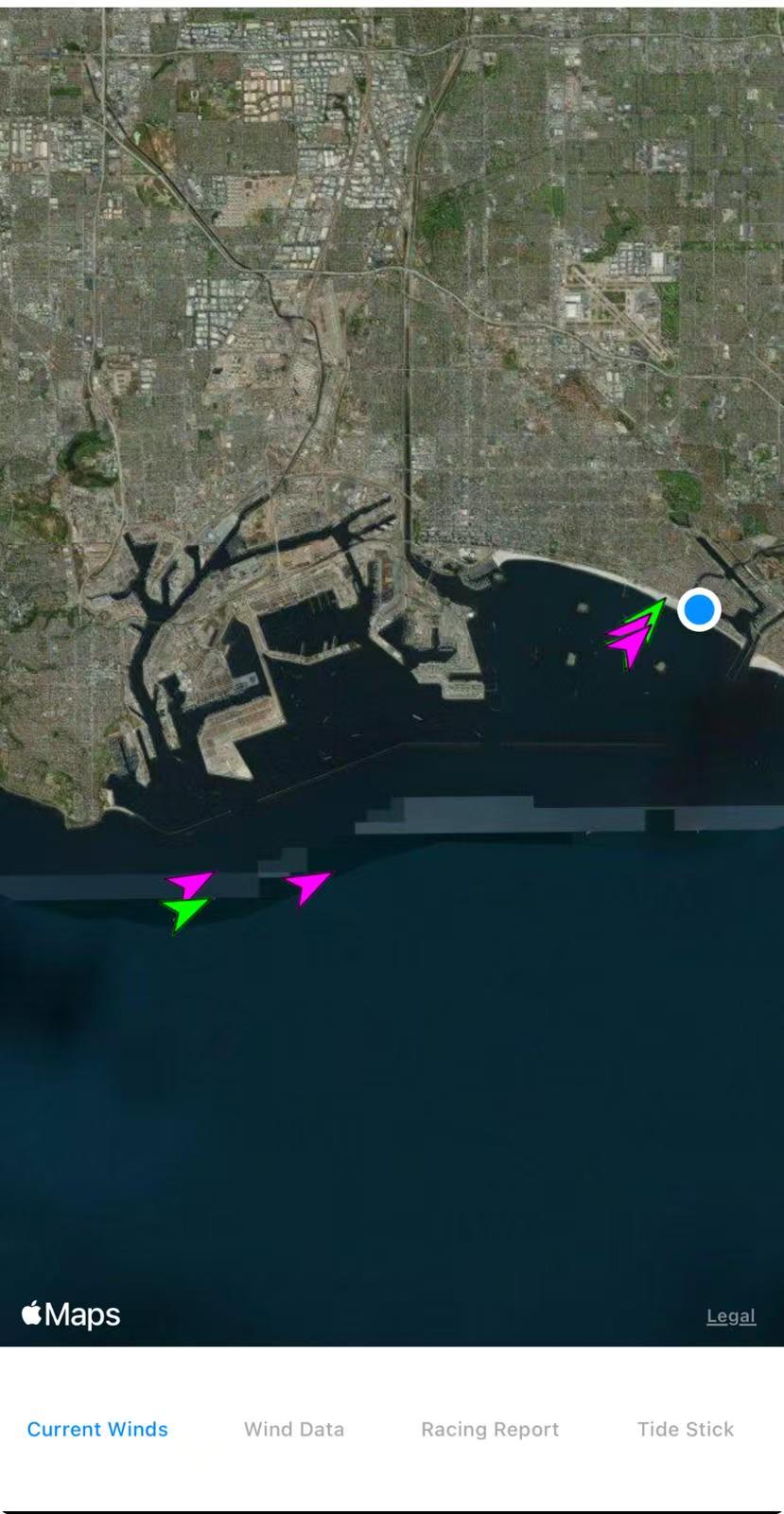
The screenshot provided for this case shows a map with colored markers and tabs for wind data, a racing report and a tide stick. It helps illustrate the software view used around training. It does not, by itself, identify the sensor model or prove that every displayed value was being uploaded live.
How boat data reaches the coach on shore
A practical sailing telemetry workflow starts at the sensor and finishes in the software used by the coach. An onboard processor or gateway receives the readings. A compatible tablet or computer then sends the selected data through its internet connection to the team's service. The receiving application must support that upload or synchronization workflow.
Marine sensors → compatible recorder or gateway → connected app or computer → NomadsFi hotspot → available cellular network → team data platform
This is an example architecture, not a wiring diagram from the UK team. Existing NMEA equipment may need an interface before an app can read it. The Digital Yacht NavLink2 is one example: it makes NMEA 2000 data available to supported apps over a local WiFi network and can join an existing wireless network. It does not turn a marine data bus into satellite internet or automatically publish its readings to a cloud account.
Test the complete path before departure. A tablet that is connected to an instrument's isolated WiFi network may not also have internet access. Check whether the gateway can join the hotspot network, whether the app can receive the readings in that configuration, and whether uploads actually arrive at the destination.
Images need a compatible path too. A phone can upload its own photos; a separate camera may require its app or a transfer to a computer. Live video puts a much greater demand on uplink capacity than occasional still images. If continuous streaming matters, test that exact stream on the water.
Why multi-network boat WiFi helps near shore
A connection that works in the marina may behave differently on the training course. Boats move relative to land-based towers, and the route changes during the session. The practical benefit of a multi-network service is having more available carrier options than a setup restricted to one provider.
NomadsFi's U.S. service can use supported AT&T, T-Mobile and Verizon networks, depending on the device, active plan and location. The PocketFi 5G product page describes NomadSwitch-AI carrier selection. Confirm the available networks with NomadsFi for your proposed setup before the camp.
Carrier switching does not combine three networks into one faster link, and an upload or call can be interrupted during a change. It also cannot create service where no supported carrier has a usable signal. Test data uploads along the intended route, then keep local recordings so a brief disconnection does not erase the session.
There is no fixed offshore distance promised here. Coverage, congestion, weather exposure of the installation and the position of the device all affect the result. Use the coverage information for initial planning, followed by a field test. Treat 5G as a supported connection type where available, rather than a speed guarantee at sea.
NomadsFi vs phone tethering, marina WiFi and satellite internet
Boat internet solutions suit different distances and workloads. For a temporary coastal training camp, we favor NomadsFi's portable hotspot approach because it gives the crew a dedicated connection and a plan they can arrange around the trip. Satellite service belongs in the comparison when your route goes beyond terrestrial coverage.
| Solution | Useful for | Main consideration |
|---|---|---|
| NomadsFi PocketFi mobile hotspot | Shared crew WiFi and compatible data uploads near shore | Needs usable supported cellular service and an active plan |
| Phone tethering on AT&T, T-Mobile or Verizon | A small crew or short session with a suitable phone plan | Check tethering allowance, roaming and the phone's availability |
| Marina or harbor WiFi | Uploading recordings after returning to the dock | Test access, congestion and signal at the berth |
| Installed marine cellular router | A permanent installation designed around the boat | Plan mounting, antennas, power and compatible service |
| Starlink with suitable marine service | Routes where ocean-capable satellite connectivity is required | Check eligible hardware, water-use terms, installation and data costs |
Starlink's ocean-use guidance sets out plan and hardware requirements for use on water. Check current terms for your region and route. A terrestrial mobile hotspot and an ocean-capable satellite setup solve different coverage needs; this case includes no comparative speed or cost test.
For trips that include flights and land travel as well as sailing, our portable WiFi hotspot buying guide explains the broader device choices.
Prepare a mobile hotspot for a sailing training camp
- Map the training area, including the marina, expected sailing course and support-boat route. Ask about service for those locations.
- List the devices that need internet and the interfaces they use. Verify the gateway, camera and app workflow rather than assuming every instrument can connect directly to WiFi.
- Select a plan around telemetry, image uploads and other crew use. Leave room for retries, updates and sessions that run longer than expected.
- Activate and test the hotspot before departure. The NomadsFi Help Center provides setup and troubleshooting guidance.
- Secure the hotspot in a suitable dry, ventilated location with reliable power. Salt spray and heat matter; confirm protection requirements for the exact model. Do not assume a portable hotspot is waterproof.
- Run a complete on-water upload test. Check the received readings and images, not just the WiFi symbol on a tablet.
- Keep local logs and an agreed reconnection process. Keep the boat's required marine communications and safety equipment independent of this internet link.
Data planning deserves a separate trial. As an illustration, a continuous 2Mbps upload uses about 0.9GB per hour before overhead. Four hours a day over 20 training days would total about 72GB. That is arithmetic for a hypothetical stream, not a measurement from the customer's equipment. Measure your own software's use before choosing a package.
Frequently asked questions
Can I use a mobile hotspot on a sailboat?
Yes, compatible WiFi devices can use a mobile hotspot where its supported cellular service is available. Test the actual sailing area and protect the device from the marine environment.
Does NomadsFi provide internet far out at sea?
NomadsFi PocketFi uses terrestrial cellular networks. It cannot provide connectivity beyond their usable coverage. An ocean route may need suitable satellite hardware and service.
Can a hotspot collect wind speed, humidity and GPS data?
The hotspot provides internet access. Separate sensors collect those measurements, and a compatible recorder, gateway or app sends them over the connection. Exact integration depends on your equipment.
Is NMEA 2000 WiFi the same as boat internet?
No. A marine gateway can share NMEA data locally over WiFi without an internet connection. Uploading that data to a remote platform needs a separate internet path and compatible software.
Can NomadsFi switch between AT&T, T-Mobile and Verizon?
Supported U.S. service offers multiple carrier options, subject to the device, plan and local availability. Confirm eligibility with NomadsFi. Switching is not three-network bonding and does not guarantee uninterrupted sessions.
Can I send live sailing video through a mobile hotspot?
It depends on the camera or encoder, available upload capacity and data allowance. Test the intended stream on the actual route. Still images and saved clips are alternatives when continuous streaming is unnecessary.
What does Simon confirm about the British Sailing Team deployment?
In the video, Simon identifies himself as the team meteorologist and says they used NomadsFi 5G routers for six weeks during Los Angeles training for the 2028 Olympics. He describes reliable equipment, signal offshore and helpful local support. The case page separately records seven PocketFi devices.
Is PocketFi 5G worth considering for a sailing trip?
It is an option for a crew that wants a portable shared connection near shore. Check supported service, equipment compatibility, power and data needs before choosing it. See the current product and plan pages for purchase options.
Plan your crew's connection before the first launch
Tell NomadsFi where you will train, how long you will stay and what your equipment needs to upload. For a camp with several boats or support staff, include the number of devices and the places they will be used. That makes it easier to choose service around the working setup.
Explore PocketFi 5G Discuss a sailing team project
Next steps: watch Simon's testimonial, compare data plans, check destination coverage, or read the British sailing team customer story.
Sources and further reading
- Simon: British Sailing Team meteorologist, video testimonial
- NomadsFi UK sailing team customer story
- PocketFi 5G and NomadSwitch-AI
- NomadsFi destination coverage
- NomadsFi data plans
- Airmar 300WX: wind, GNSS and environmental measurements
- Digital Yacht NavLink2: NMEA 2000 to WiFi
- Sailmon: tracking, instrument inputs and performance data
- Starlink: ocean use and eligible service plans