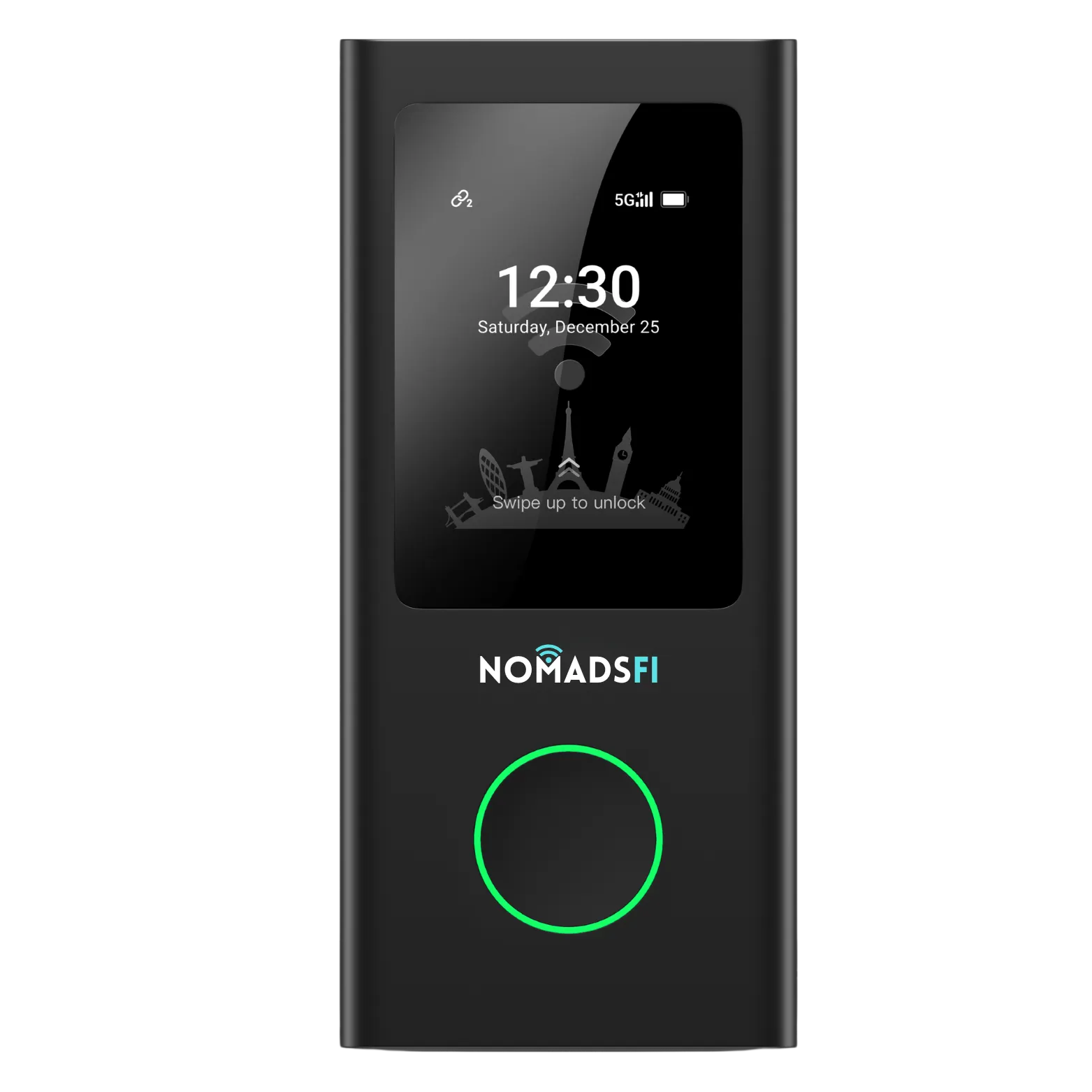
One Router, 32 Scanners, 5 Retail Giants: How a Global Inventory Provider Stays Online Everywhere
Every hour a retail store is offline, its inventory data goes dark. For a global inventory management and stock-counting provider serving some of the world's biggest retailers, offline is not an inconvenience — it is a client-facing failure.
The challenge: run continuous barcode-scanning operations across hundreds of store locations in the United States, Europe, and Asia — using one connected hardware stack that works the same in a Manhattan flagship as it does in a rural EU distribution center — without buying a single local SIM.
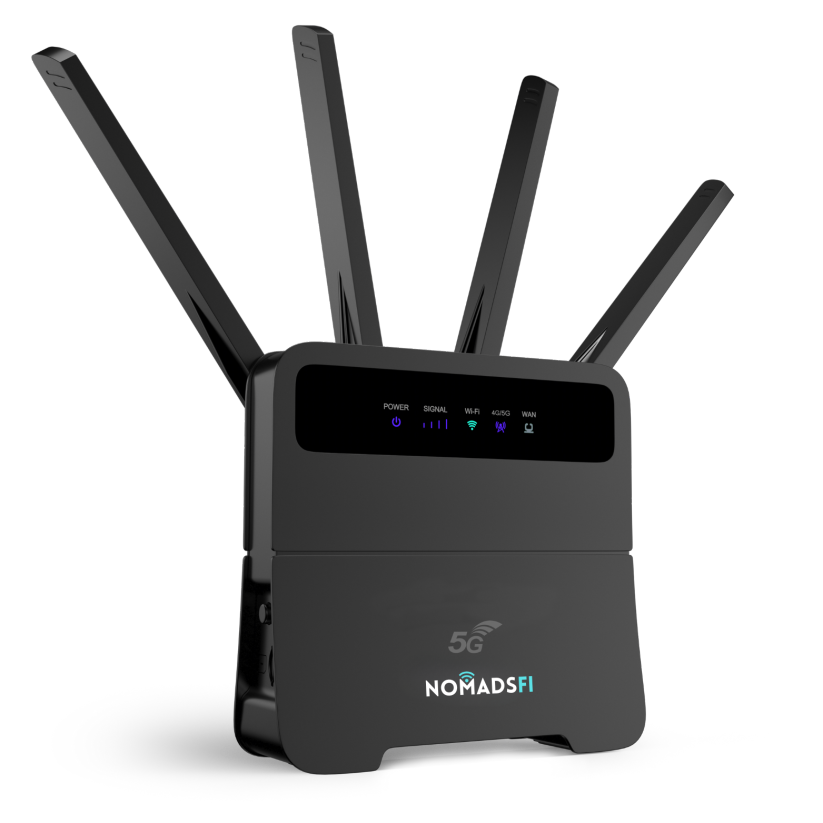
Here is how a NomadsFi Home/Global Router fleet solved it.
Table of Contents
- The operation: 32 scanners, one router, real-time reporting
- Why multi-network coverage matters for retail
- Why "one global plan, no local SIM" matters for international rollouts
- The results the provider sees
- Who else can use this model
- Fleet connectivity FAQ
- Set up your own fleet
The operation: 32 scanners, one router, real-time reporting
The provider's core service is retail inventory integrity: teams of counters walk stores with handheld barcode scanners, verifying stock levels for major retail clients including 7-Eleven, Best Buy, Costco, Walmart, and H&M.
Each scanner needs live connectivity to the central reporting server. When a scanner goes offline, counts stop and the client's system shows stale data. The requirement was exact:
- One router per counting station, connecting up to 32 barcode scanners simultaneously
- Real-time reporting of every scan to a central server
- Nationwide US coverage across AT&T, T-Mobile, and Verizon networks
- One global data plan that works in Europe and Asia too — no local SIM cards, no per-country provisioning
- Zero downtime windows during store audits
Why multi-network coverage matters for retail
Retail backrooms and store floors are interference-heavy environments: metal shelving, concrete, and dense RF traffic from store systems. A single-carrier router dies exactly when the store's own network is congested.
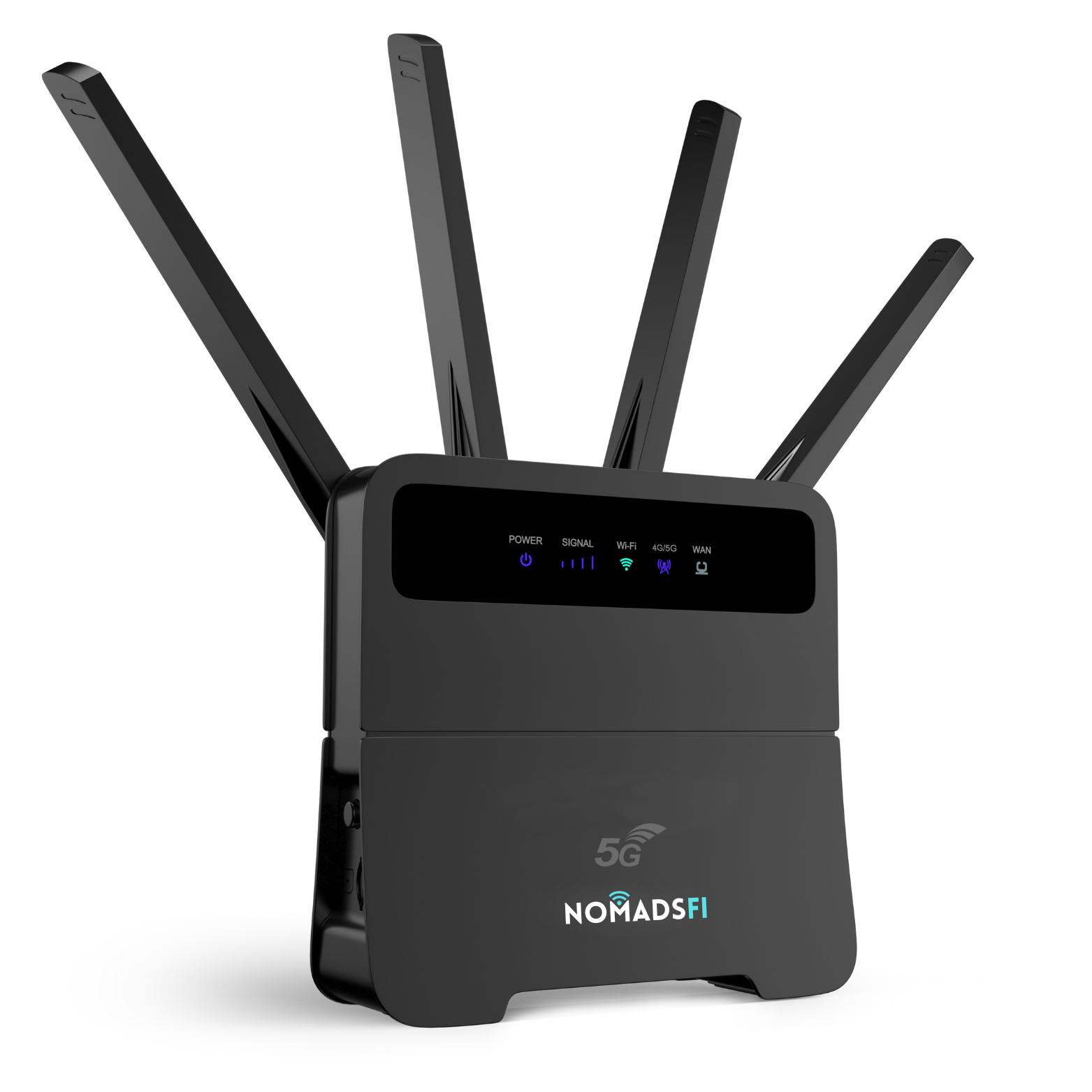
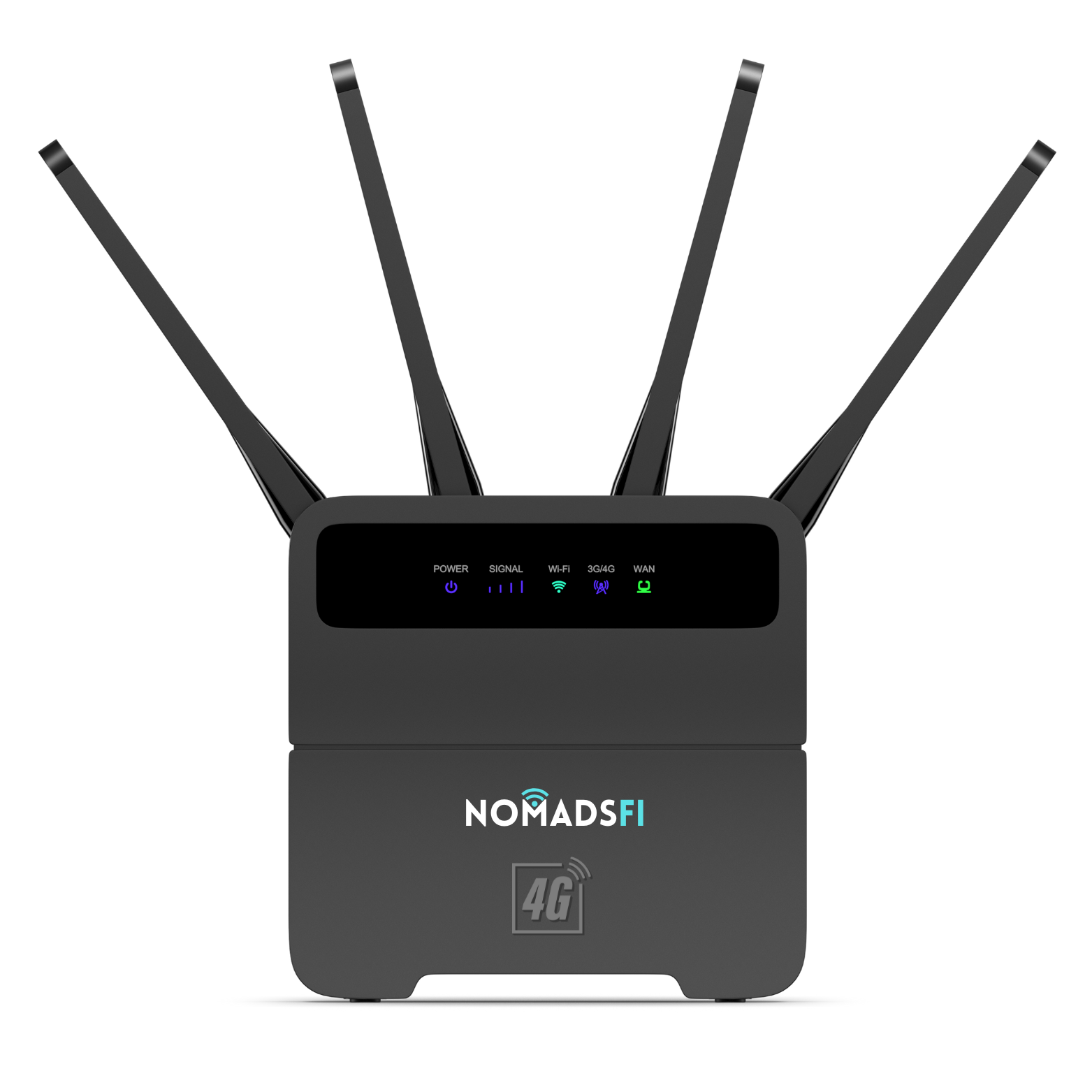
The NomadsFi Home/Global Router uses multi-network (AT&T / T-Mobile / Verizon) connectivity, switching to the strongest carrier automatically. If one network degrades inside a store, the router shifts to another — scanners stay online, and counts keep flowing to the central server.
In practice this means the provider no longer has to guess which carrier performs best in which store. One device carries all three networks, and the coverage decision happens automatically, store by store, in real time. That single capability eliminates the largest historical source of scanner dropouts during audits.
How the three networks work together
| Carrier | Role in the fleet | What happens if it degrades |
|---|---|---|
| AT&T | Primary network in many eastern US stores | Router auto-switches to T-Mobile or Verizon |
| T-Mobile | Strong in urban and mid-west locations | Router auto-switches to the strongest alternative |
| Verizon | Key coverage in rural and warehouse areas | Router auto-switches without interrupting scans |
Why "one global plan, no local SIM" matters for international rollouts
When the same provider sends teams across Europe and Asia, most hardware options force a choice: ship SIMs per country, or rely on local carriers per site.
With NomadsFi's global data plans, the same device and plan follow the team across countries. No local SIM procurement, no roaming activation delays, no per-country IT tickets. The router works in 200+ countries on the same billing line — which collapses the logistics of running inventory operations across three continents.
This is the "one global network" model: whether a counting team is in a Chicago warehouse or a Rotterdam distribution center, the connectivity layer is identical — same router, same dashboard, same data plan. That uniformity is what lets a multi-continent operation run with the simplicity of a single site.
The "one network" breakdown
| Requirement | Traditional approach | With NomadsFi global router |
|---|---|---|
| US coverage | Pick one carrier, hope it's strong everywhere | AT&T + T-Mobile + Verizon on one device |
| International coverage | Buy and provision local SIMs per country | One global plan, one device, 200+ countries |
| Device capacity | Multiple routers or hotspots per station | Up to 32 scanners on one router |
| Data reporting | Batch uploads, delayed counts | Real-time uploads to the central server |
| IT overhead | Per-country tickets and SIM inventory | One SKU, one onboarding, one bill |

The results the provider sees
- Continuous scanning uptime — scanners report in real time to the central server throughout store audits, including during peak retail seasons.
- One router per station — 32 concurrent scanner connections with no dropped device limits.
- Reduced connectivity logistics — no per-country SIM inventory, no local carrier negotiations, one global bill.
- Faster onboarding of new store locations — any store, any country, same device setup.
The impact shows up in numbers the provider tracks every week: scanner connection failures during audits have effectively disappeared, new store onboarding dropped from days to under an hour, and the same router that ran a Manhattan flagship can be redeployed to a Berlin distribution center the next week without a single support ticket. What used to be a logistics project per country is now one SKU and one bill.
Who else can use this model
| Industry | Connectivity need |
|---|---|
| Inventory & stock-counting providers | 32 scanners per router, real-time reporting |
| Field service & installations | Onsite tools, tablets, and reporting |
| Retail pop-ups & event stores | Store-grade WiFi without venue dependency |
| Logistics & warehousing | Yard and dock connectivity, multi-network resilience |
| Security & inspections | Mobile reporting from any site, any country |
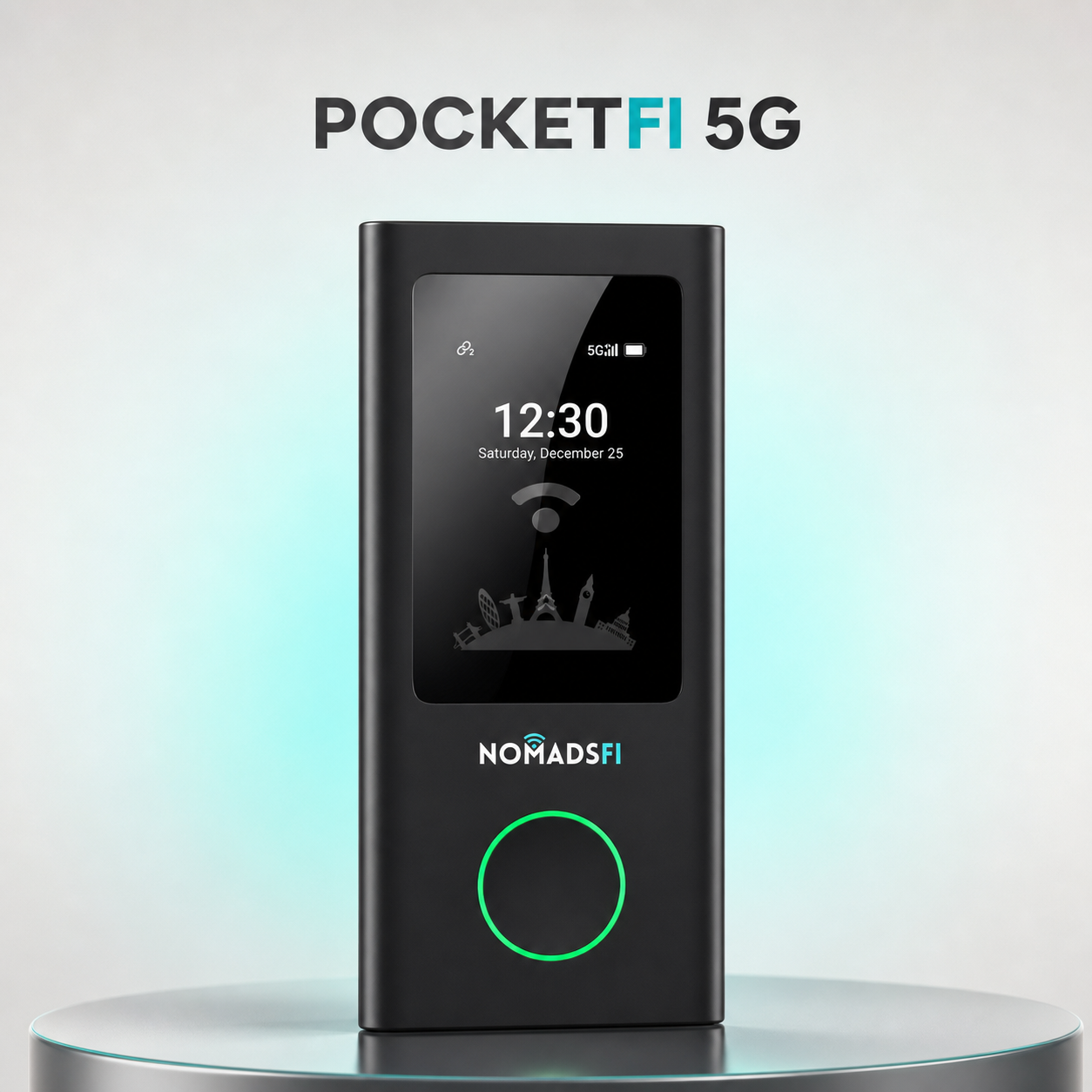
Smaller teams that don't need 32 scanner connections can run the same model with a PocketFi 5G rental — up to 16 devices, 200+ countries, and the same no-contract flexibility. The hardware scales with the operation, not the other way around.
Fleet connectivity FAQ
Why 32 scanners on one router instead of many smaller hotspots?
Fewer devices mean fewer failure points, simpler logistics, and lower cost per station. One router replaces several hotspots, and the multi-network redundancy keeps all 32 scanners online even when a single carrier degrades inside a store.
Does the router really switch carriers automatically?
Yes. The NomadsFi Home/Global Router carries AT&T, T-Mobile, and Verizon simultaneously and selects the strongest signal in real time. No manual switching, no downtime windows during audits.
How does the same device work internationally without a local SIM?
CloudSIM delivers the network profile over the air. The device works in 200+ countries on one global data plan, so the same router that counts inventory in the US can be redeployed in Europe or Asia with zero provisioning.
What data plan fits a fleet of routers?
Fleet plans are consolidated into one bill, per device or per team, and can be managed from the central dashboard. Talk to our team on the NomadsFi plans page to size data for your operation.
Set up your own fleet
Whether you run 5 stations or 500, the model is the same: one NomadsFi router per station, multi-network resilience, a global plan, and a central dashboard. Every station gets the same connectivity layer, which is exactly what a service provider needs to scale across continents without scaling complexity.
- Buy the NomadsFi 5G Router — up to 32 devices, 200+ countries
- Rent PocketFi 5G — portable option for smaller teams
- See how global teams use WiFi for inventory counting
- See how centralized IT management scales connectivity
- Explore the enterprise hotspot solution
- Compare the best mobile WiFi hotspots in 2026
- Talk to our team about fleet plans
For retail giants, inventory data is trust. For this provider, NomadsFi is how that trust stays online — across the US, Europe, and Asia, on one network.